
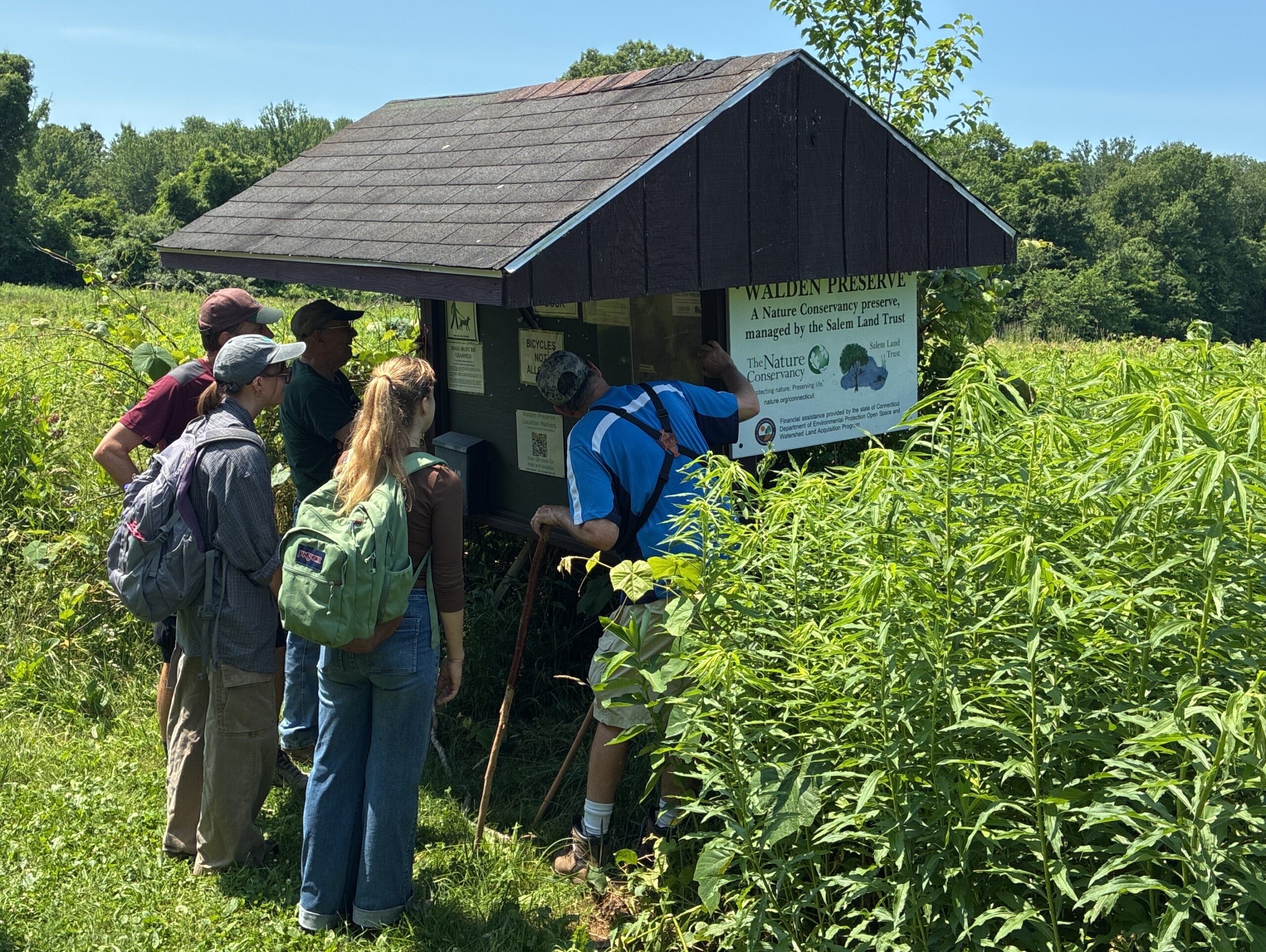
Learning Through Hands-on Conservation: A Halfway Point Reflection on our Internship at Avalonia*
By Amelia Newstadt and Kennedy Holsapple
This summer, we have been interning with Avalonia as land stewards, working with staff, other interns and volunteers. This internship is a first for both of us when it comes to immersive fieldwork, and it’s safe to say we’ve learned an incredible amount about field ecology and environmental stewardship as a whole. Gaining hands-on experience in caring for preserved land gives us insights that we can take into our future careers in environmental conservation.
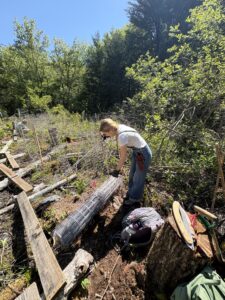
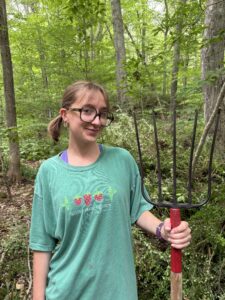
The range of stewardship work is broad. Every week, we monitor several of Avalonia’s restoration sites. At Anguilla Brook Northern Headwaters, for example, we’re working on maintaining healthy Atlantic White Cedars, Black Spruce, and other riparian seedlings, a longer-term project funded by CT Botanical Society, ECCD, and CT DEEP . Our time there consists of installing/maintaining protective fencing , watering, managing competing vegetation, and making observations on the overall health of the plantings. It’s a great feeling to walk out of a site knowing we’re nurturing these seedlings that will one day, hopefully, be ten times taller than we are. We do similar restoration work at Parke Memorial, Cedar Wood, and Hunter Brook Preserves, as well as at Dean’s Mill Wildlife Corridor.
Another project that we have been helping to develop and implement is a series of BioBlitzes, or plant and animal identification events using the iNaturalist app. We’ve been helping to advertise the events, identify as many species as possible in selected preserves, engage with citizen scientists, and curate the data. This is an effective way to not only look for state-listed plants and animals, but also to better understand and protect the land we are stewarding. The iNaturalist data can be integrated into Avalonia’s land conservation software and used to inform any number of stewardship tasks.
In addition to this, we accompany Avalonia staff, committee members, and others on acquisition walks where the conservation values of a potential acquisition are assessed, leading to decisions as to whether Avalonia should take on conserving the land.
And, as we’ve learned, stewardship isn’t entirely fieldwork. In an effort to learn more about potential threatened, endangered or special concern species that might be on our preserves, we’ve been compiling Natural Diversity Database Requests. By using preserve management plans and various mapping tools, we compile information that can be sent to the Connecticut Department of Energy and Environmental Protection (CT DEEP). Resulting information is used to update preserve management plans.
We are so lucky for this opportunity to work with experienced staff and volunteers and are excited to tackle the rest of the summer and learn everything we can about conservation and stewardship!
* Southeastern New England Educational and Charitable (SNEC) Foundation has partnered with Avalonia to fund this internship program.