
Saving Hoffman’s Hemlocks, One Beetle at a Time
By Jeff Alexander
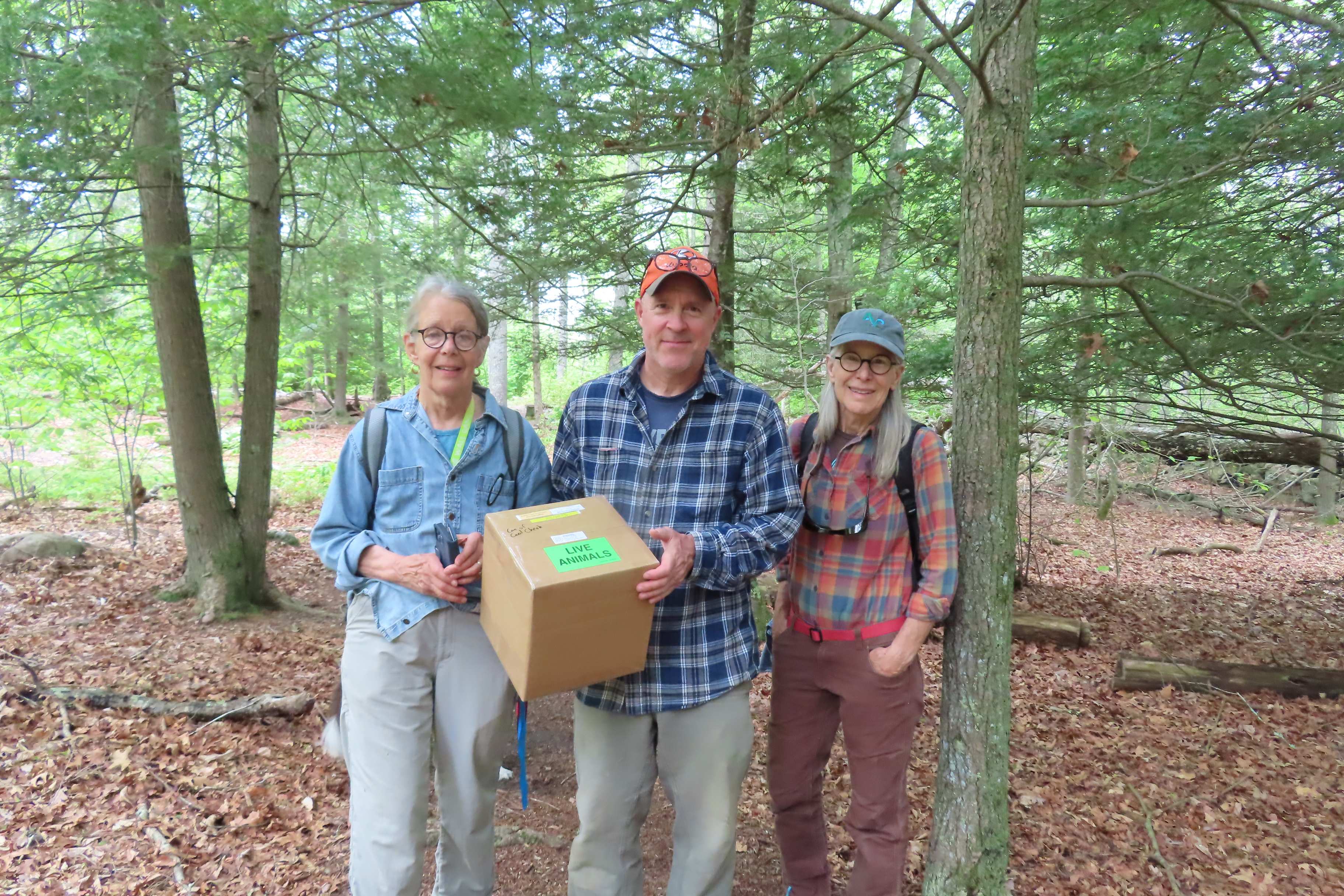
During a recent Friday afternoon, three Avalonia volunteers – Beth Sullivan, Nancy Spillane and I – met up with Connecticut Agricultural Experiment Station research scientist Dr. Carole Cheah and her dog Faith at the entrance of Hoffman Evergreen Preserve in Stonington. The reason for the gathering was packed in a medium-sized cardboard box marked “LIVE ANIMALS.”
We made our way with a leashed Faith into the forest, along the red trail toward the back of the preserve where the land descends to pond and brook. It was along the way that Dr. Cheah cut open the box to reveal ten containers sealed in cool-storage packaging. As she held up a container, we leaned forward to spy dozens of black specks moving within. Meet the Japanese ladybeetle, aka Sasajiscymnus tsugae or St beetle, archenemy of hemlock woolly adelgid (HWA).
Originating in Japan, adelgids have threatened northeast forests for decades. The invasive, aphid-like pests attach themselves to healthy hemlock trees and drain them of their sap, ultimately killing the hosts. With no local competition, they spread as they’re carried from tree to tree by wind or attached to animals.
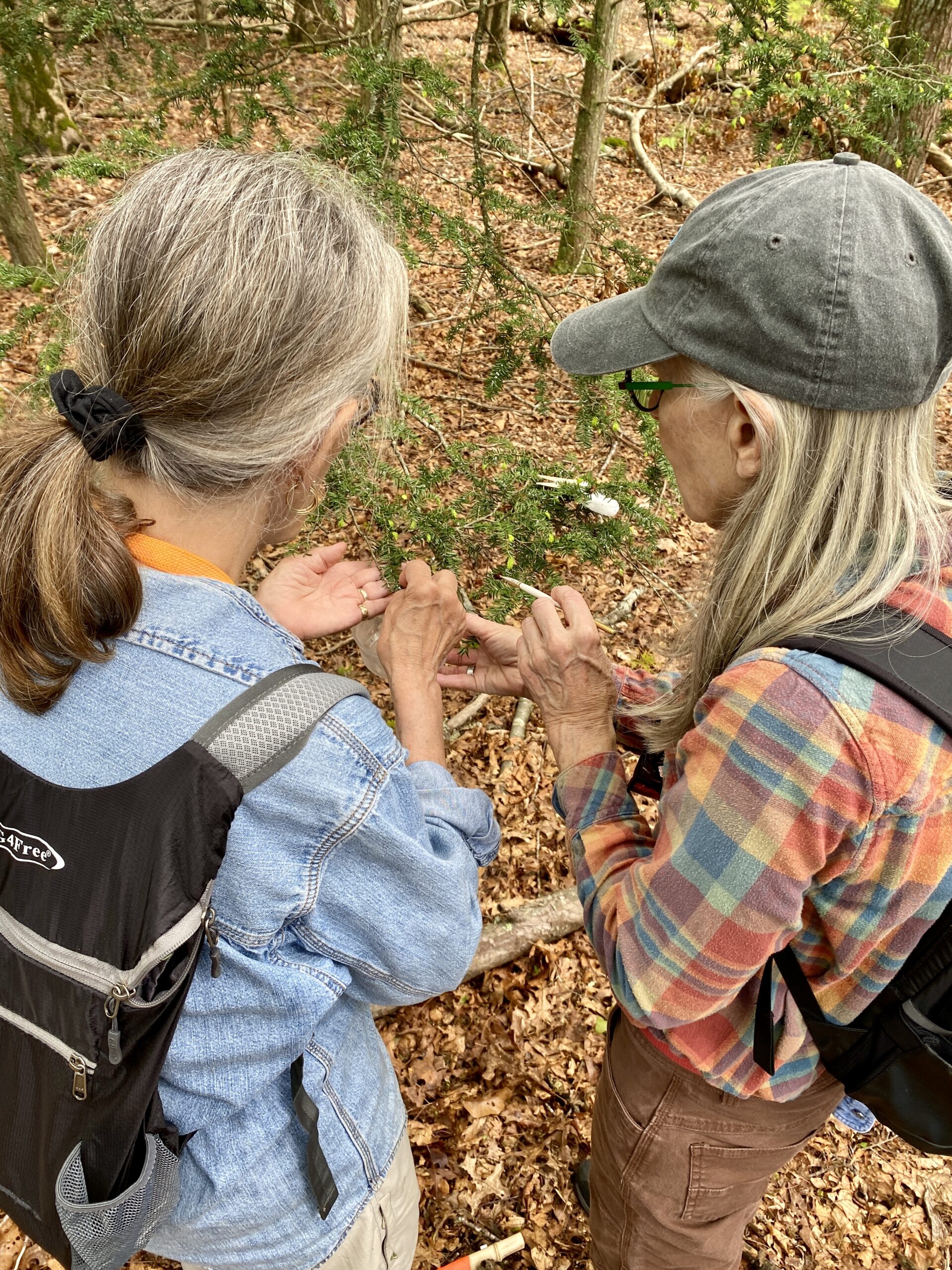
Dr. Cheah was hired by the Agricultural Experiment Station nearly 30 years ago to research and combat the adelgid and has distributed and released more than 300,000 St beetles across the state. As she assisted us in attaching the insects to branches at multiple Hoffman sites, she cheerily shared insights and called out in satisfaction when we spotted a hemlock bough covered with white HWA eggs. “Time to eat!” she sounded off to the ladybeetles.
The flying insects, tiny all-black members of the ladybug family, exclusively feed on adelgid, and Dr. Cheah has developed a relationship with Pennsylvania-based Tree Savers, a company that breeds and sells the “biological control agents” to individuals, organizations and government agencies. Each beetle can produce several hundred eggs in a short period of time, Dr. Cheah explained. This is promising for Hoffman, as it’s expected that tens of thousands of the adelgid-hungry bugs could inhabit the preserve by end of summer.
Recognizing the importance of the HWA effort at Hoffman, Avalonia budgeted and committed the funds over the past year to purchase Tree Savers colonies.
Sullivan, who served as Avalonia’s Stonington town chair for 15 years while projects like this one and the Hoffman reforestation were executed, was very optimistic about the day’s activities. “It’s amazing to think that something so small can make such a big difference,” she said. “I think we’re all inspired to be part of something that gives us a real chance to push back on HWA. And it’s reassuring to know we’re not working alone.”