
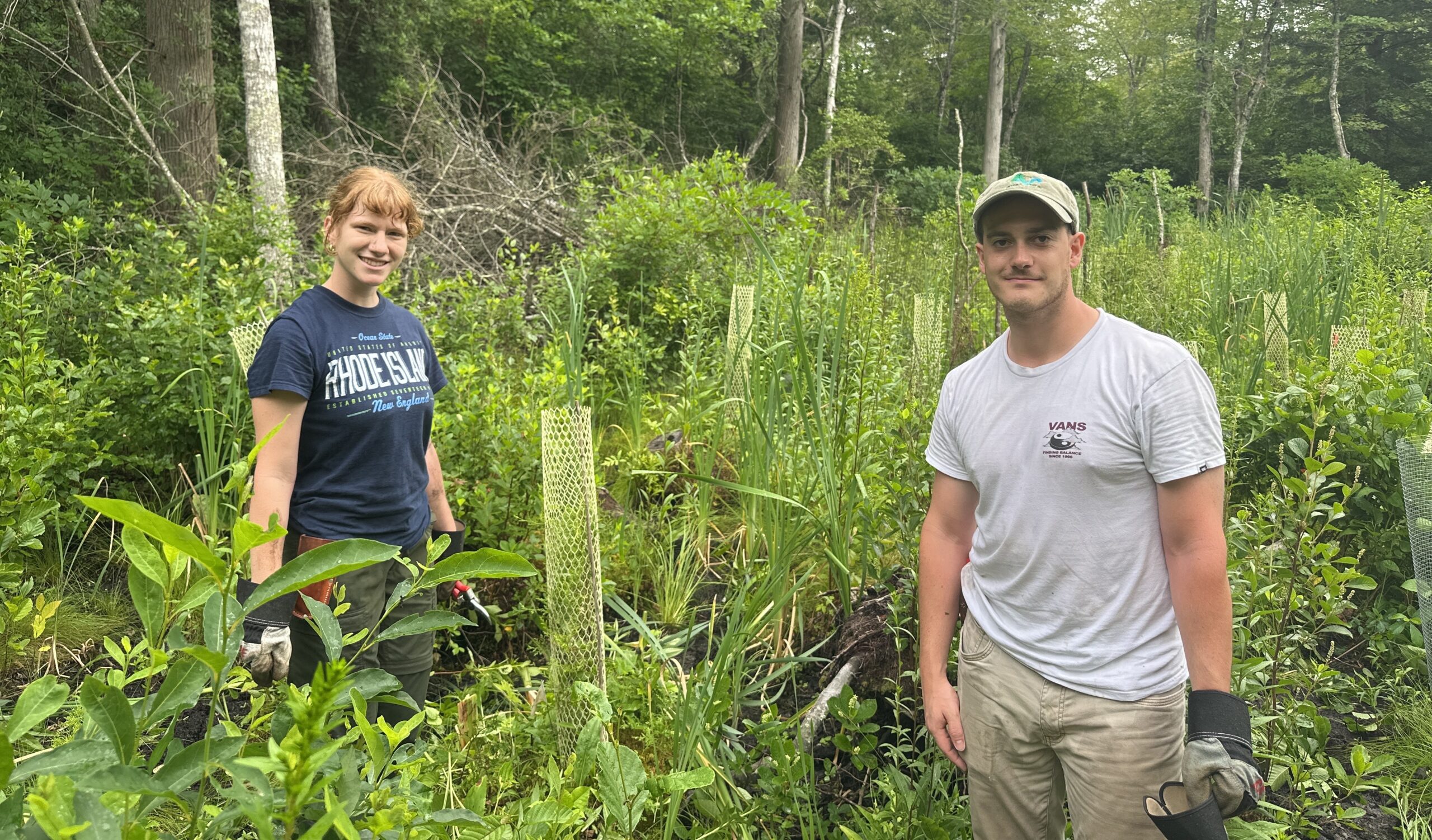
Avalonia Land Stewardship Interns Morgan Reynolds and Coleman Pushlar reach the midpoint in their SNEC funded learning opportunity!
Story and photos by Coleman Pushlar and Morgan Reynolds
We have officially reached the halfway point of the internship (a bittersweet milestone), and so far, it has been packed with land stewardship and conservation activities. It has been a joy getting to know and connecting with the incredible team of staff, volunteers, other interns, and additional land stewards in the area.
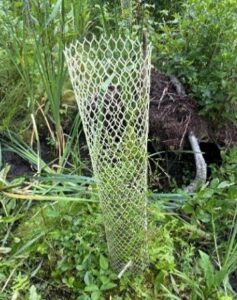
While our responsibilities have been varied, my primary focus this summer is the Anguilla Brook Cedar Swamp Restoration Project. We visited Anguilla Brook Northen Headwaters Preserve on my first day with Avalonia, and I immediately fell in love with its beautiful diversity. The project aims to protect and monitor Atlantic white cedar tree plantings, which will one day grow to be independent and host a plethora of other plants and animals. Wetlands like Anguilla Brook are unique ecosystems, often with specially evolved species that cannot survive elsewhere. Therefore, the project also includes monitoring for invasive species and identifying any species of concern that may be living there.
Apart from the Anguilla Brook project, we have participated in site visits and the monitoring of various preserves, which involves, among other things, noting anything that may limit the conservational values associated with a given preserve. This includes both human encroachments and biological concerns such as invasive species. Each preserve has something unique to offer, but one of my favorite visits was to Sandy Point Preserve, an island in Little Narragansett Bay renowned for its beautiful barrier beach and views of both Connecticut and Rhode Island coasts. As a bird lover, this site was especially exciting due to the presence of many species I had never seen before, such as the American Oystercatcher!
Through this monitoring, we have explored the wide range of habitats stewarded by Avalonia as well as the great diversity of plants and animals living there. While I have more experience with animals, I have gained invaluable and necessary experience with plant identification, invasive plant removal strategies, and habitat restoration techniques. Practicing plant skills was one of my primary goals entering the internship, so I am very excited by my progress and look forward to continuing throughout my final weeks with Avalonia. I am particularly excited to continue at Anguilla Brook and to assist in large ongoing projects, such as preparing the Glemboski-Ous Preserve for public use and invasive plant management across different sites. I look forward to everything to come and hope to see you on the trails!
-Morgan Reynolds
___________________________________________________________________________________
During the first few weeks of this internship, we’ve traveled throughout New London County, from Bozrah to Stonington, working on a variety of preserves and conservation easements and learning the skills of a land steward. The sheer number and diversity of preserves means that there is an endless supply of work, keeping the stewards at Avalonia busy throughout the year. The three ongoing stewardship tasks that we have been involved in are the annual monitoring of preserves, invasive plant management, and small/large-scale restoration projects.
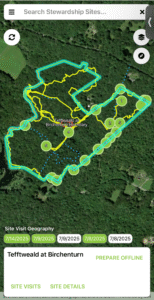
As interns, we have aided in annual monitoring of preserves, primarily within Stonington and North Stonington. We have trained in the use of the Landscape 3.0 mobile app to collect a wide range of different types of data, including recording our walk of the boundaries and portions of the interior of each preserve and documenting any encroachments or challenges to Avalonia ownership. I was glad to help lighten the annual workload for Avalonia by taking the lead in performing, documenting, and drafting reports on a subset of these annual monitorings. Among other things, this work has served to strengthen my map/survey interpretation skills and has fostered an appreciation for the “soft” skills needed to build positive relationship with neighboring property owners.
We’ve also spent a significant amount of time managing invasive plants with particular focus on Japanese barberry and Japanese knotweed. These non-native invasive plants are the subject of ongoing efforts because if left unchecked, they threaten to overwhelm the native habitat and to negatively impact recognized conservation values.
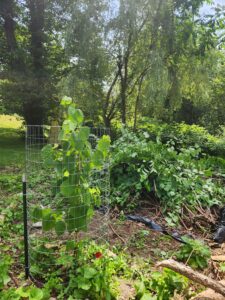
A third interrelated task involves the restoration of habitats within Anguilla Brook Northern Headwaters, Deans Mill Wildlife Corridor, Herman E. Sheets, Parke Memorial, Hunter Brook, and Cedar Wood Preserves. In addition to managing invasive vegetation, as described above, to restore these habitats, native species are planted and protected with deer fencing to prevent herbivory. As stewards, we continuously monitor and conduct release cutting of surrounding vegetation that may inhibit the growth of our desired plants.
In the remaining weeks of this internship, not only do I expect to continue working on these three main tasks but also to participate in and develop flora and fauna surveys, assist in infrastructure improvements ( trails, bridges, signage , and parking), and help in the creation of informational videos associated with our work. I am excited to keep my legs moving with my Felco clippers in hand, ready for the next half of this internship.
-Coleman Pushlar