
Opening Spaces: Multi-Sense* Strolls Make Sense for Everyone!
Story and photos by Elanah Sherman, Avalonia board member
“Hey, what’s a gneiss vug?”
Okay, let’s back up!
Avalonia has begun using a multi-sense approach on all of our walks ever since an event held last year in collaboration with members of the South East Connecticut Community Center of the Blind, when it occurred to us that the tactile and sound components of that walk were so enhancing that they could (and should) be integrated into all walks. Thus was our multi-sense approach born, facilitated by naturalist and senior walk leader Bruce Fellman, as well as guest volunteer leaders.
Mobilizing the power of multiple senses results not only in a more comprehensive educational experience but a mnemonic effect, with participants reporting that they might have lost memory of some data unless communication had been multi-sense in method.
In her book “Good Nature,” author Kathy Willis references international research to make a similar case about the value of all-senses experience, although her goal is to confirm health benefits. I can’t judge the validity of the cited studies, but here are some quick takeaways from the book: First, sight is an overrated method for achieving relaxation and contentment. Second, just as proponents of folk remedies have always claimed, the “smellscape” (lavender, anyone?) has value for mood correction, even lowering the propensity for road rage in drivers. Third, tactile experience has been found to promote calm, with softwoods having a distinctive advantage in a small sample. And last, many sounds, especially birdsong, possess “major restorative properties,” not just creating a sense of well-being, but even reducing pain. (Research does show, however, that all birdsong is not created equal when it comes to health enhancements. In other words, crows need not apply!)
In another context, Avalonia’s Development Director, Chris Kepple, shared for this article a proposition he made in his graduate thesis about the value of a multi-sense approach in fostering learning among students with disabilities, alluding to the value of “identifying the learner’s individual strength in absorbing information whether it is audio, visual or kinesthetic and then employing a combination of these strategies for best results.” A multi-sense approach to the world, it seems, has shown value in many different domains.
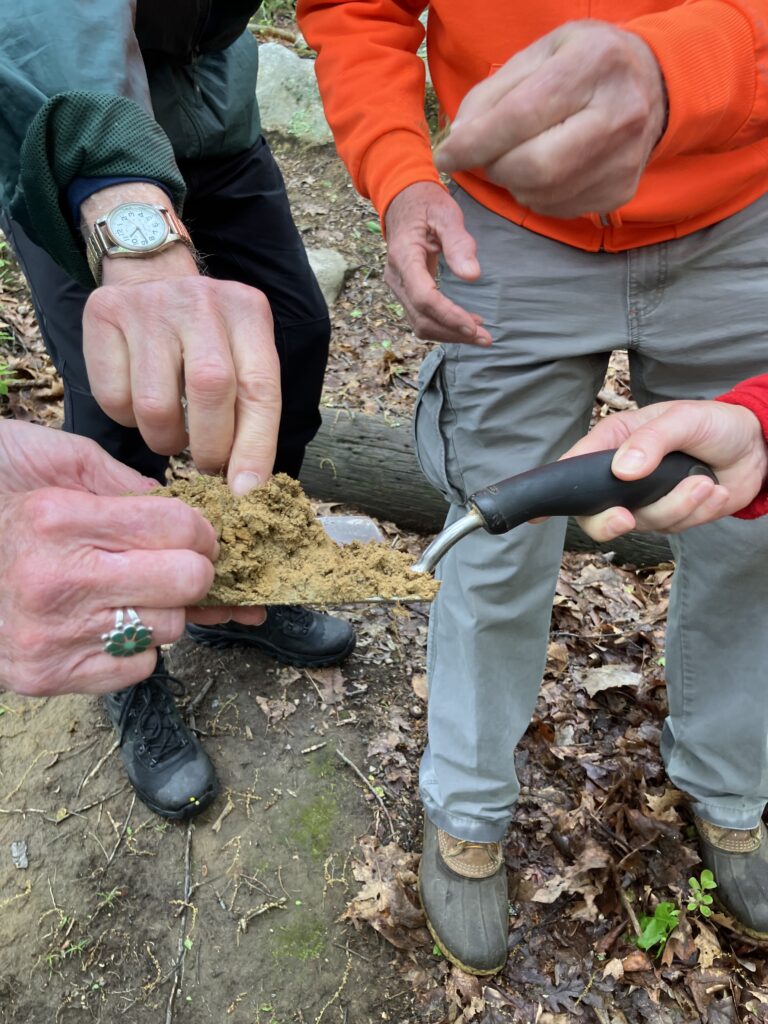
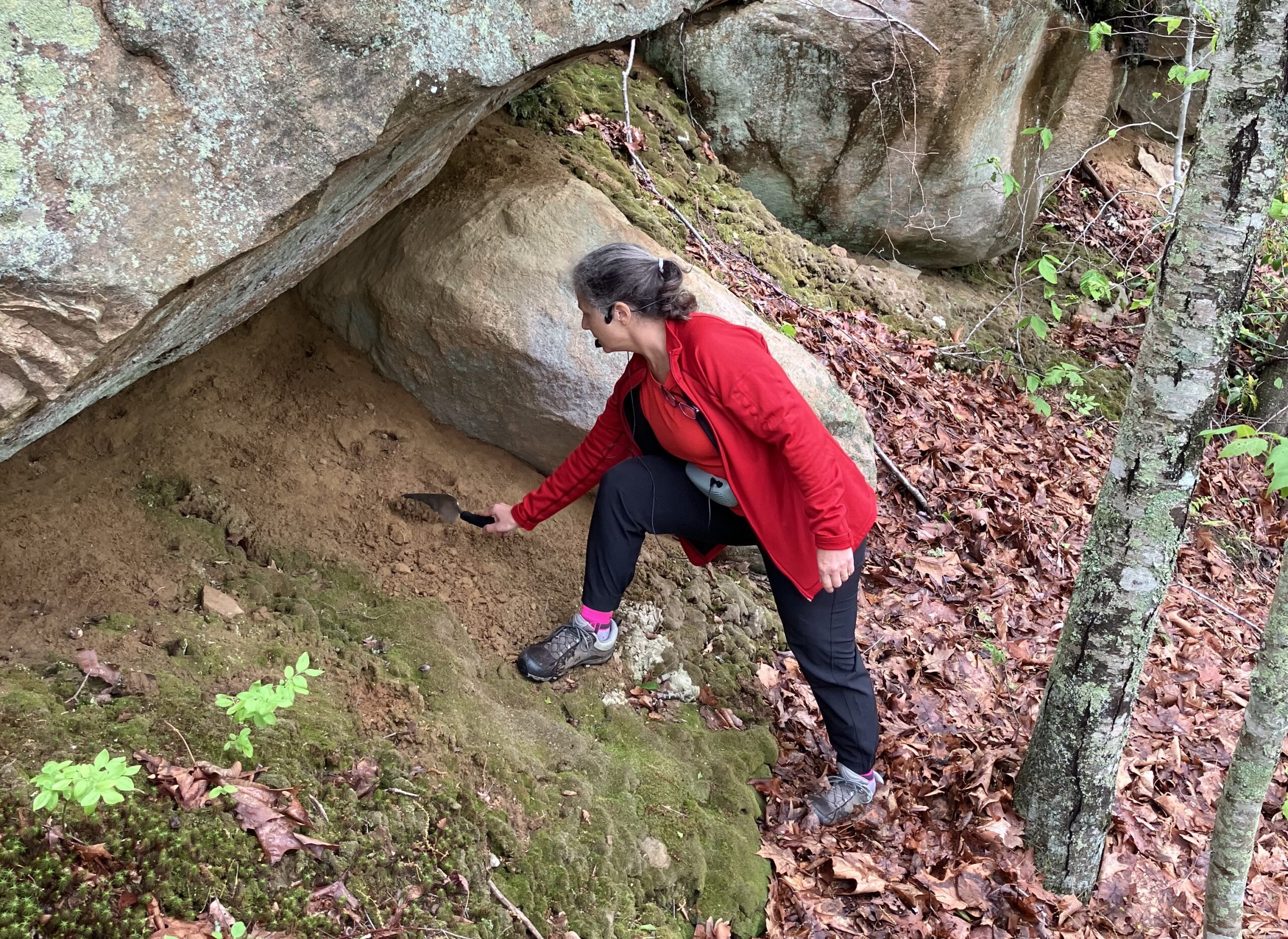
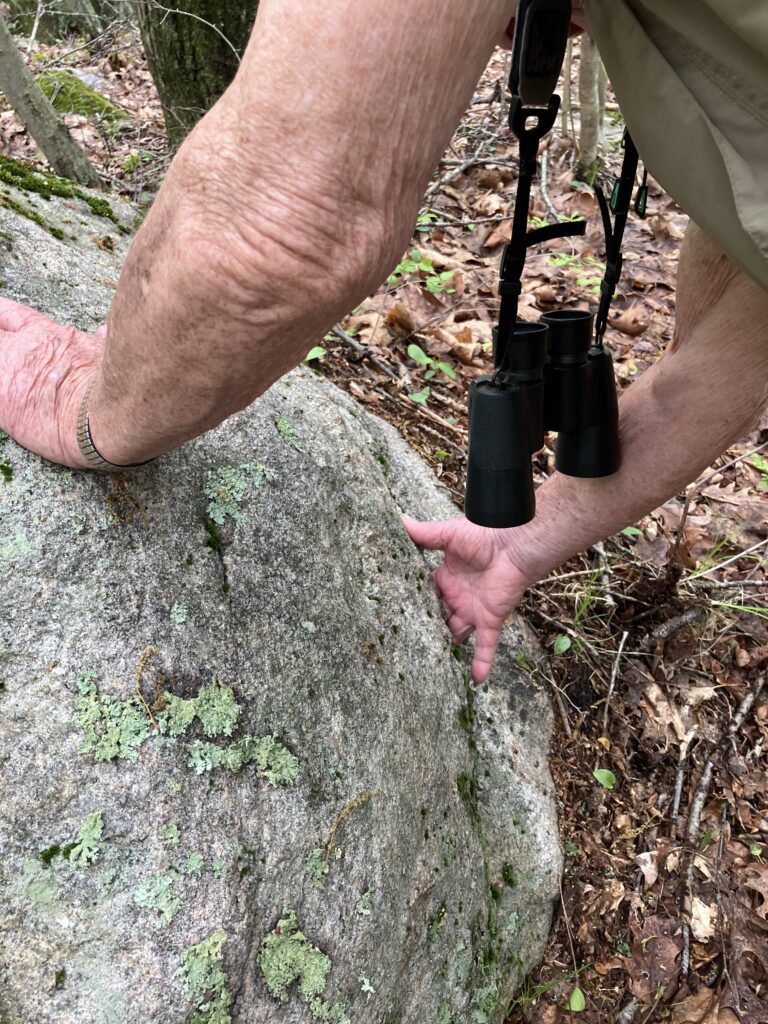
On a recent geology-themed tour of Pine Swamp Wildlife Corridor in Ledyard, geologist Mary DiGiacomo-Cohen deployed a multi-sense approach that enabled participants to gain maximum knowledge of this fascinating environment. Using touch as a vehicle of learning, Mary expedited a depth of understanding that sight, alone, could never have accomplished. Which brings us to gneiss (pronounced ‘nice’) vugs. Gneiss is a rock that has been transformed by a geologic process, like high heat or pressure, into a more compact, often layered, geological composition; vugs are cavities that, because they are often narrow and dark, can most successfully be explored through touch. (See photo). In this case, tactile exploration enabled participants to feel differences in texture representative of gneiss formations.
Does all this mean that amateur nature explorers should hit the trails smelling, touching, and tasting every specimen that makes an appearance? Well, no. The natural world is just about always interesting, but not always safe. This does mean, however, that nature strolls are most effective when experienced and informed leaders safely incorporate our different senses to enlarge our understanding of the world around us.
As naturalist Bruce Fellman notes, “Using sound pictures (called sonograms) to bring bird song to the hearing/deaf community or incorporating touch and smell to enable visually disabled folks to ‘see’ what their eyes can’t is something that’s universally valuable. It’s enriching for everyone, myself included.”
*I prefer ‘multi-sense’ to ‘multi-sensory’ because of the additional connotations that the latter term has acquired over the past few years.
Featured image: Mary digs silt for participants to touch