
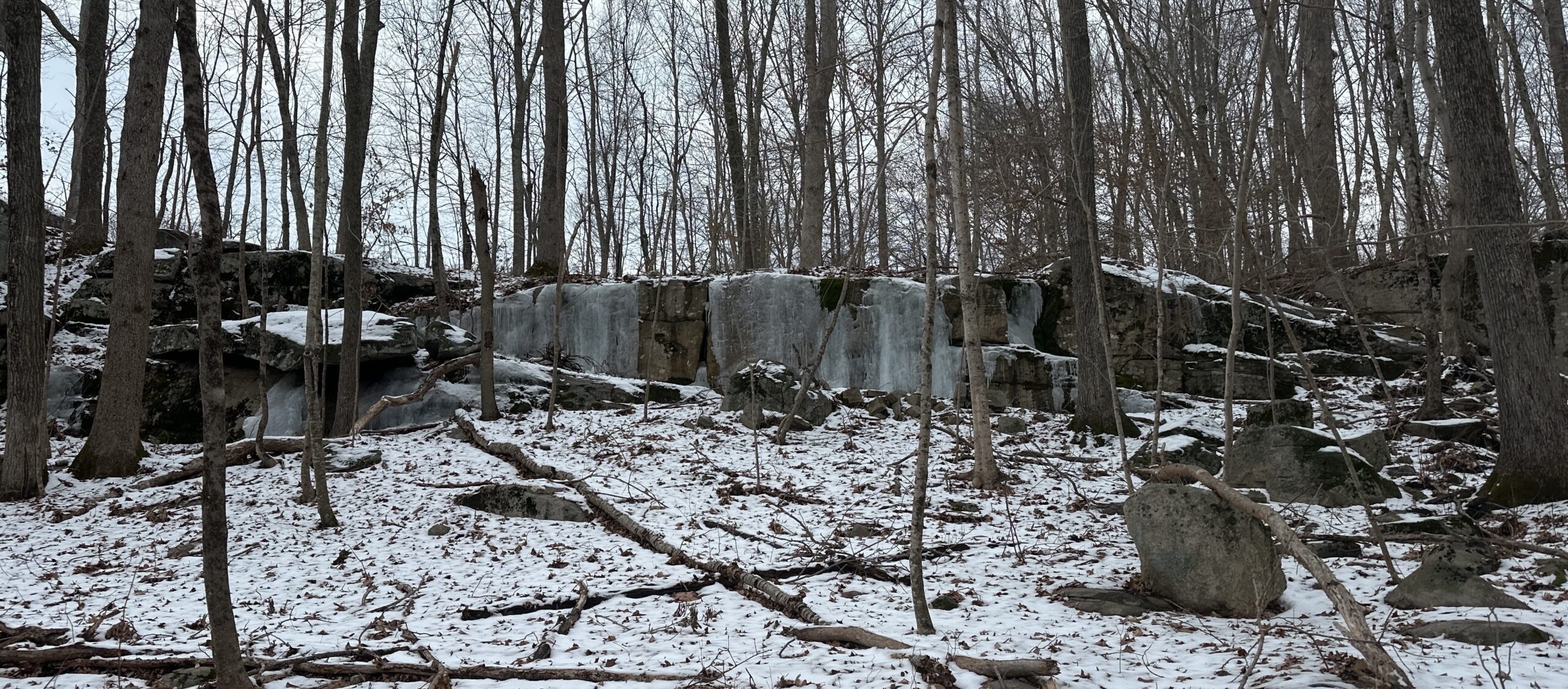
A mid-winter reflection on my 2025-2026 Land Steward Internship
By Conor Feeney
During my first few weeks at Avalonia, the focus was primarily on helping to complete the annual monitoring tasks for each preserve. During these site visits, Avalonia makes sure that recognized conservation values are intact and that any activity on the preserves is consistent with our management plans and signage. Due to the sheer volume of land that Avalonia stewards, it was a significant undertaking, made possible with assistance from volunteers. I have been able to see and experience a large number of preserves in a relatively short time as a result of this; each with their own unique history, habitats, and conservation values. The nature of these tasks has given me ample opportunity to learn how to navigate in the woods using both GPS, surveys, and physical structures as guides, as well as the identification of local flora and fauna (it’s not so easy when all the leaves are gone).
As the year closed out, new projects have made their way to the top of the priority list. Each day brings something new, with my most recent endeavor being that of habitat restoration, specifically connecting fragmented chunks of Atlantic White Cedar to each other at the Anguilla Brook – Northern Headwaters preserve. Restoring fragmented and imperiled vegetative communities like this is beneficial for a number of reasons, such as providing suitable habitat for other species (including endangered, threatened, or species of special concern), improving resilience in the event of disturbances, and enhancing genetic health through increased biodiversity.
 When not in the field, I’ve been preparing requests to the Connecticut Department of Energy and Environmental Protection’s (DEEP) Natural Diversity Database (NDDB) for a prioritized selection of Avalonia preserves. A review by DEEP’s biologists will indicate whether State or Federally listed plant or animal species are present or potentially present. This information is periodically updated and, as land stewards, we have a responsibility to know what is on each preserve and to adjust our management plans according. I have found this to be a particularly meaningful task as these species can play a pivotal role in ecosystem stability, whether it’s pollination, nutrient cycling, or predator/prey dynamics. My goal is, before the end of the internship, to make a significant dent in the list of preserves for which Avalonia still needs NDDB information. In the second half of this internship, I’m looking forward to the continued refinement of my species and habitat identification skills, and working on anything and everything there is to do with wildlife. There’s some pretty cool stuff out here if you know where to look.